

Why does a body-worn transmitter lose range?
Soak Up Sound · 3 min read
An antenna on skin or a sweaty shirt means a weaker signal and more dropouts. How much you lose and what helps.
A bodypack transmitter's antenna often lies on the skin or on a sweaty shirt. The body then absorbs part of the energy and detunes the antenna, so the transmitter radiates less power. This is called the body effect.
How much
- Up to ~10 dB more radiated power from just a few millimetres of distance between antenna and skin, according to Sound Devices. Touching skin or wet clothing lowers it a lot.
- ~10 dB: the average lower horizontal gain of bodypack transmitters compared with handheld mics, precisely because of the body (CEPT report, Ofcom Switzerland, 2017).
- 10 dB = 10× the power. In free space that is theoretically about 3 times the range. On set it mostly means signal headroom and fewer dropouts when the actor turns.
These figures come from the literature, not my own measurements; the gain depends on the transmitter, frequency, clothing and how the antenna lay before. Sources: Sound Devices “Appropriate Antennas Defined” and CEPT FM51 “Body effect”, Ofcom Switzerland.
What helps
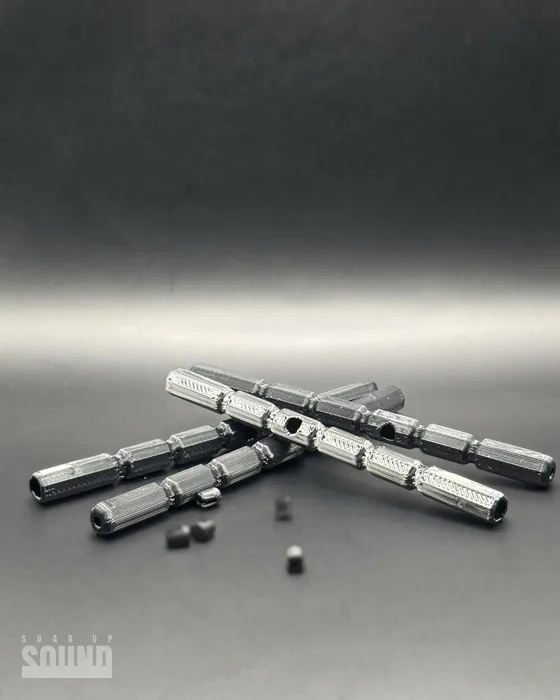
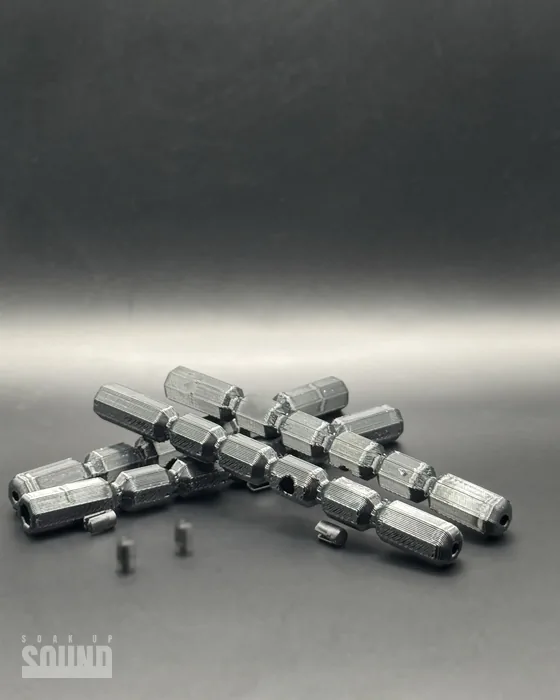
- Distance between antenna and body. A few millimetres make a difference. RF Shield (Slim and Heavy Duty versions) is a segmented soft TPU guard that holds the antenna away from skin and clothing, with a clip that locks it on the antenna.
- Protecting antennas in the bag. Receiver antennas stick out of the bag and catch on car doors and stands. The guard takes the hit, bends with the antenna and springs back.
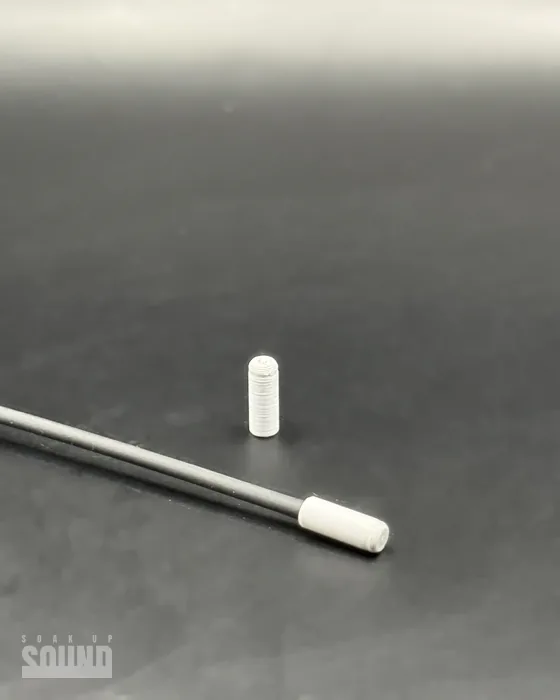
- A safe tip. Thin whip antennas have a sharp end that pokes and punctures bags. The RF Cap covers it, and different colours help you tell transmitters apart.
Products in this article
Questions and comments
- …